RFP Assist
ProductionBuilt at work for a national healthcare data companyProposal teams answer the same questions again and again. RFP Assist drafts each answer from the approved Loopio library, shows where the wording came from, and leaves every decision to a reviewer.

What it does
- Drafts RFP responses from the company's Loopio answer library, with reviewer approval on every answer and built-in checks that flag claims against registered figures, catch answers still naming another health plan, and block export while placeholders remain.
From my resume.
Who it is for
The proposal team answering health plan RFPs.
The outcome
From 3 to 4 months to 2 to 3 weeks
Average RFP response time, before and after.
How it works
Load
The client's own questionnaire comes in as it is, and every question keeps its cell.
Draft
Each question is matched against the Loopio library, and the closest current answers become the draft.
Check
A claims register flags figures that disagree with registered values, and answers that still name another health plan.
Decide
A reviewer accepts, edits, or rejects every answer.
Export
Export stays blocked while placeholders remain, and answers are written back into the client's file.
The real screens
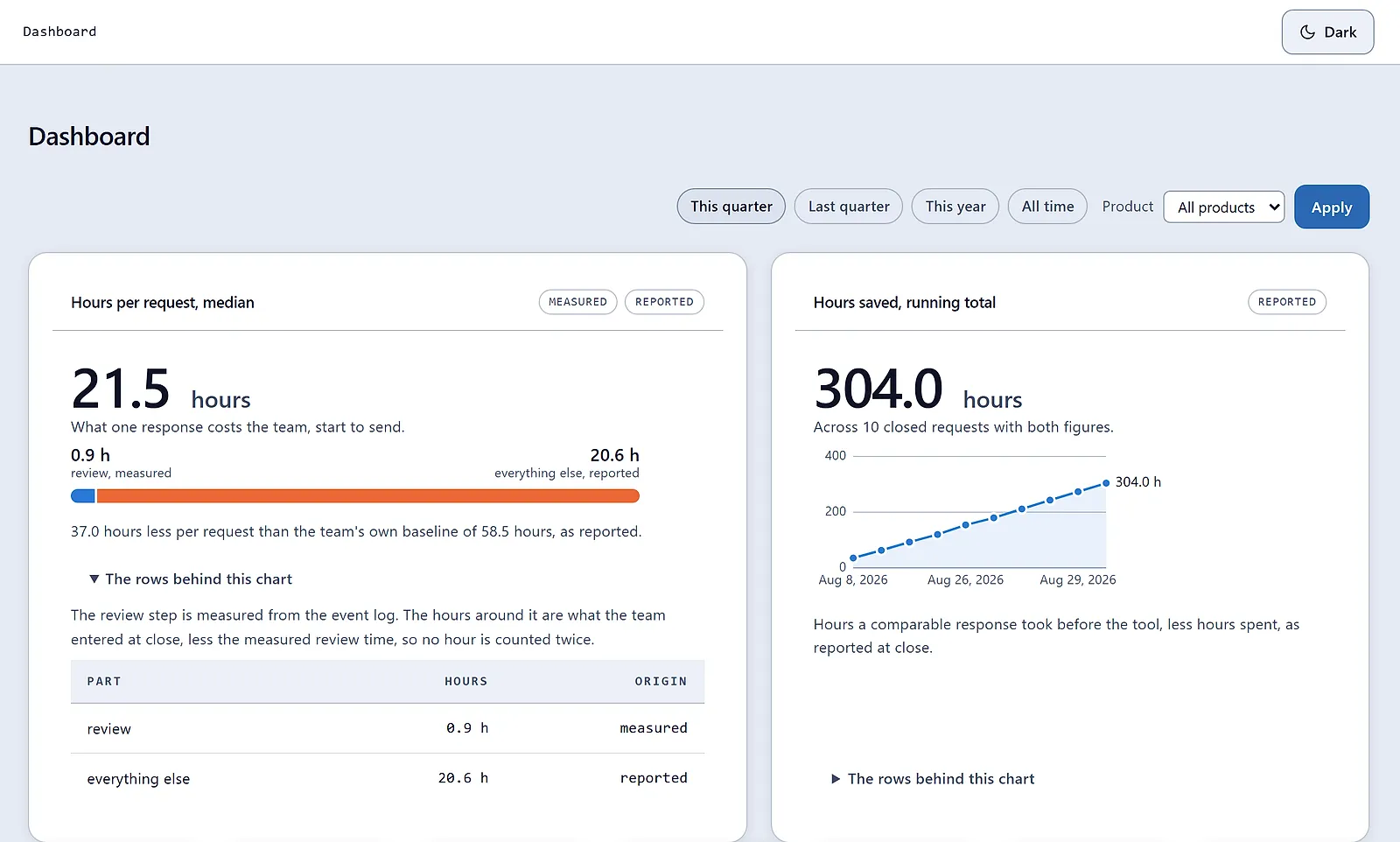
Measured and reported. Review time comes from the event log. The rest is what the team reported at close.
Hours saved. A running total, counted only for requests that have both figures.

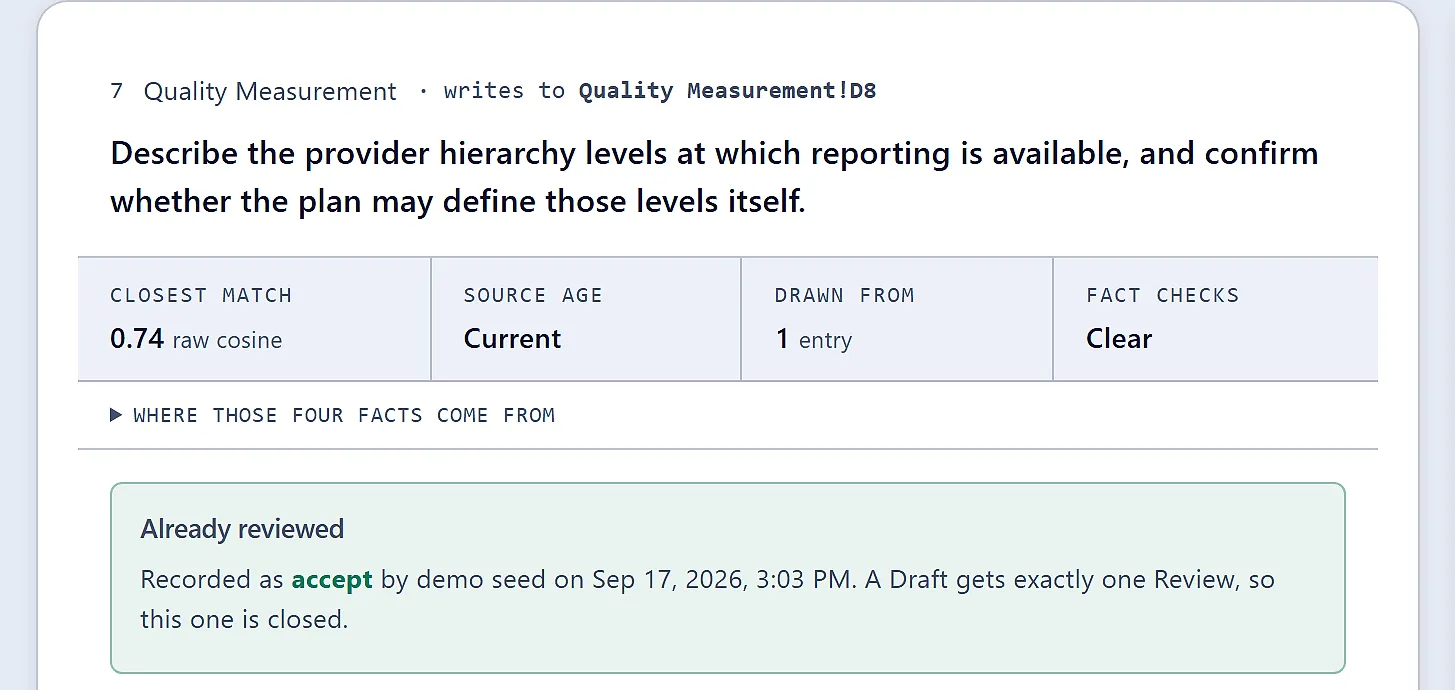
Four facts. Source match, source age, how many entries it drew from, and the fact check, above every draft.

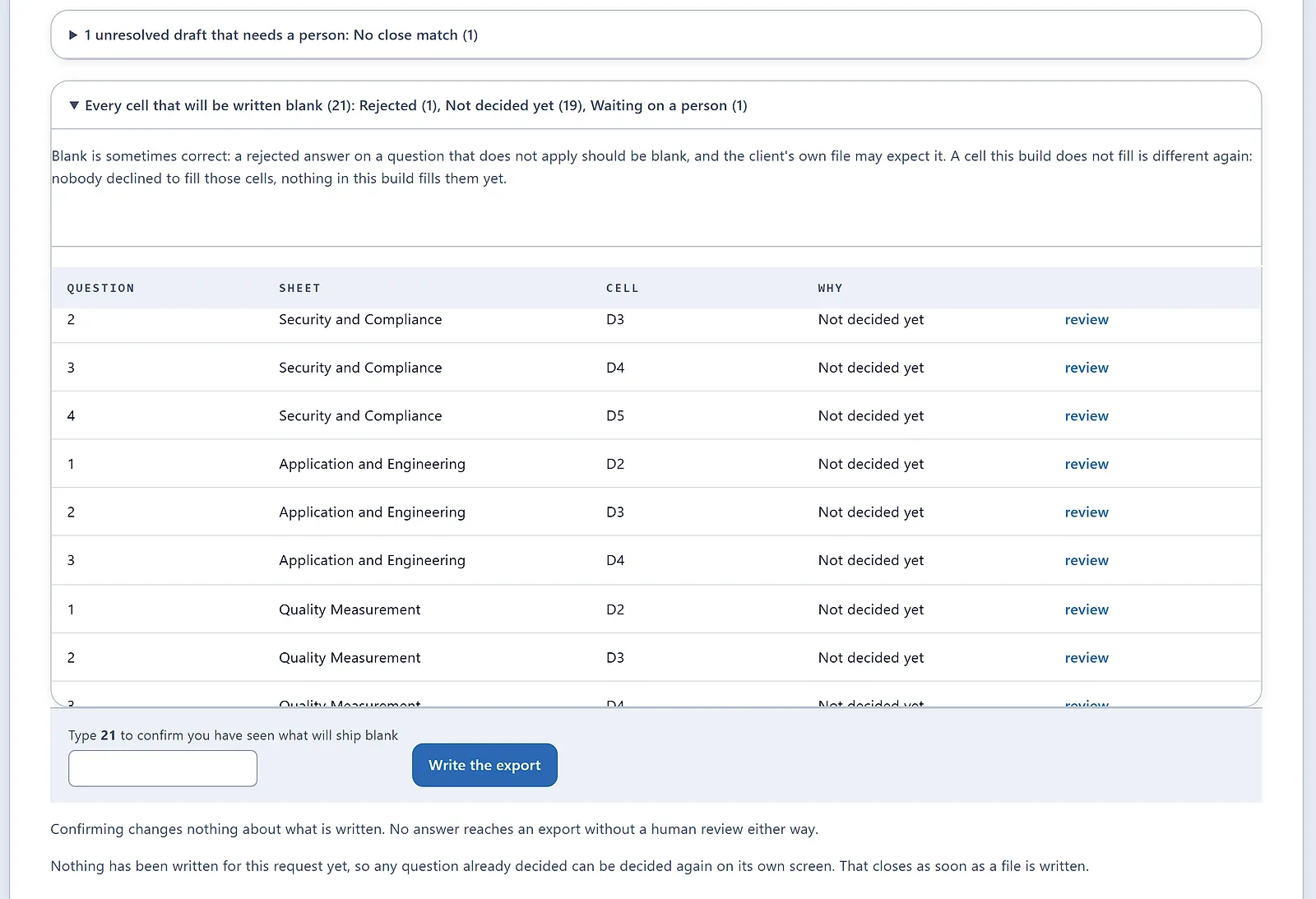
Blank cells, listed. Every cell that would ship blank is listed with the reason.
Typed confirmation. The reviewer types the count before anything is written.

The decision that matters
A person confirms every figure
When a draft disagrees with the figures register, RFP Assist flags it where the reviewer reads it instead of quietly changing the number. A person keeps the register, and a figure nobody has confirmed should reach a person before it reaches a client.
Built with
- Loopio answer library
- Excel questionnaires in and out
- Retrieval with ranked sources
- Figures register