How I Build
What I test for

- 3risks covered
- 17guards in place
- 7apps protected
Coverage map
Risk 1
Hidden instructions that trick the AI
Prompt injection is text that tells a model to ignore its rules, hidden in an email, an uploaded file, or a web page the model reads. The model cannot reliably tell its owner's instructions from an attacker's, and OWASP lists prompt injection first in its Top 10 for LLM applications. Since no filter catches every hidden instruction, the controls below limit what a tricked model can do.
Hidden instruction
Text in an email, a file, or a web page tells the model to ignore its rules.
The model reads it
It cannot reliably tell its owner's instructions from an attacker's.
Where the guards step in: A person or a check
Depending on the app: drafts and plans wait for approval, answers come only from approved sources, or code checks the model's reply.
The action is held
The hidden instruction meets a person or a check before an action goes out.
Guards in my apps
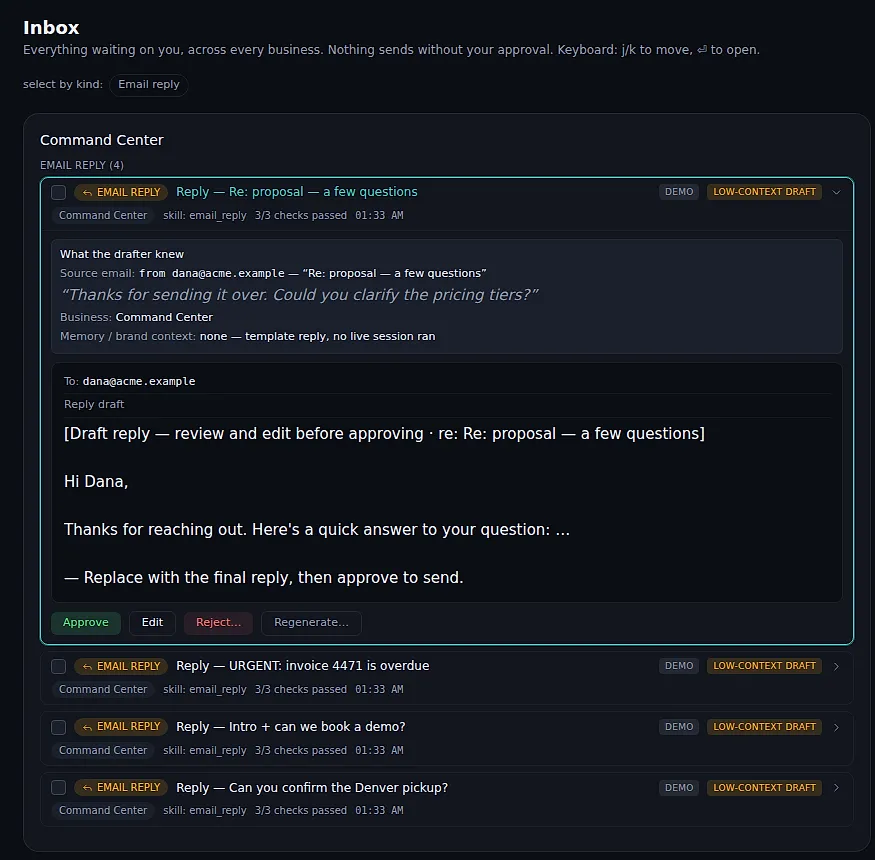
Command Center OSIn development
Emails, posts, and memory edits all arrive as drafts, and nothing sends until I approve it.
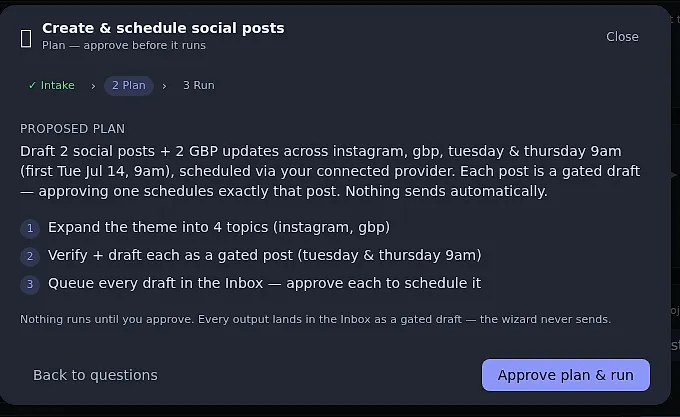
Command Center OSIn development
Agents ask a few questions, show the plan, and wait; nothing runs until I approve the plan.
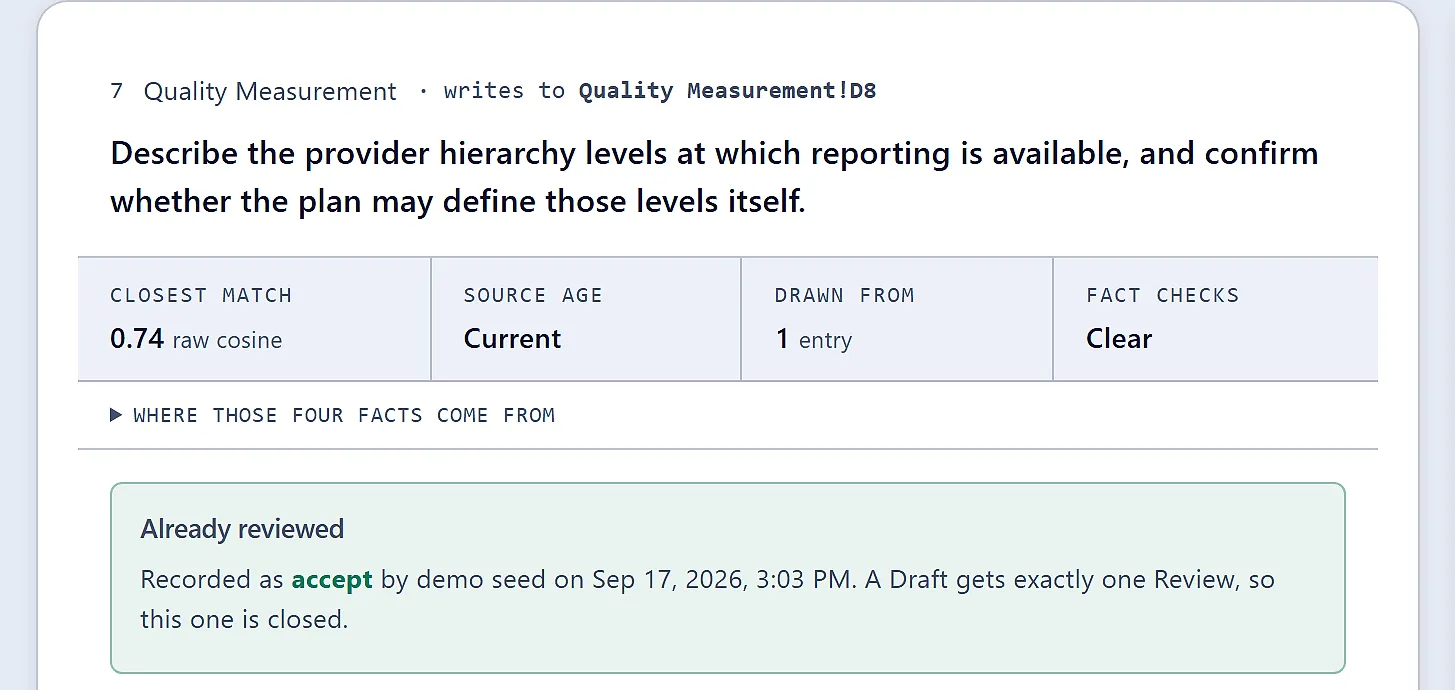
RFP AssistProduction
RFP Assist drafts answers only from the company's approved answer library, and a reviewer accepts, edits, or rejects every answer.
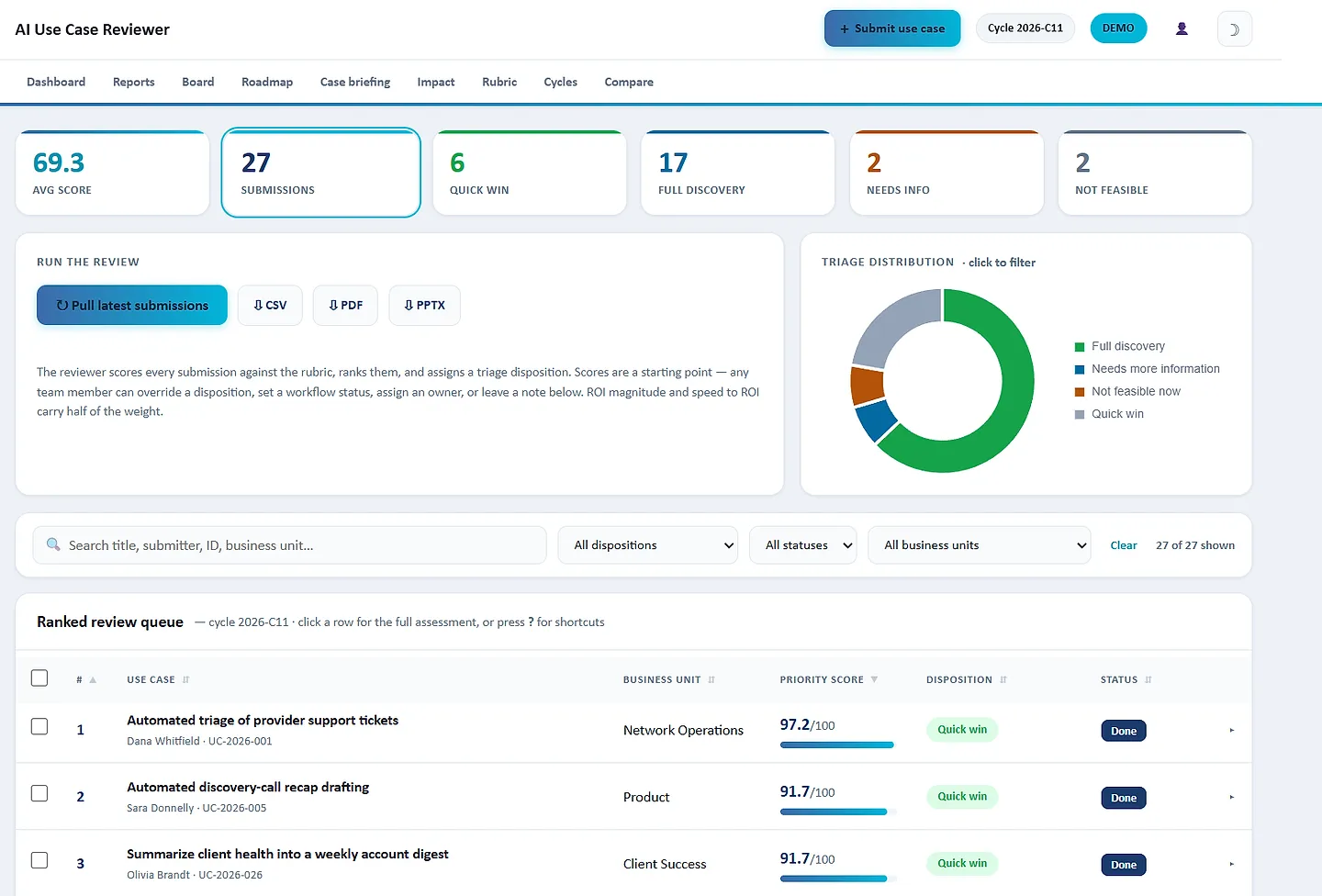
AI Use Case Submission PlatformProduction
The model rates each dimension with a reason, the app computes the score and the outcome, and a reply with unexpected fields or unreadable values falls back to the rule engine and is flagged as a fallback.


Risk 2
AI that acts without asking
Excessive agency means a model has more power than its job needs: it can send email, change records, or run code, and it acts on a bad instruction or its own mistake. OWASP lists it in the same Top 10. The fix is fewer permissions, and a person in front of any action that leaves the system.
Too much power
The model can send email, change records, or run code.
A bad instruction or a mistake
It acts on an attacker's words or on its own error.
Where the guards step in: Fewer permissions, a person at the door
Depending on the app: external actions wait as drafts, tools sit under permission levels, or production changes need a person.
The action waits
No external send or production change goes out until someone approves it.
Guards in my apps
Command Center OSIn development
Command Center OS holds every external action as a draft with automated checks until I approve it, and the trust ramp can never remove the gate on external sends.
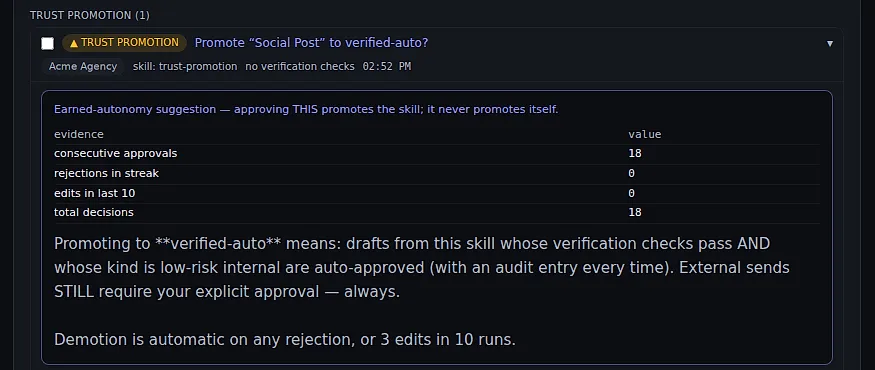
Command Center OSIn development
After a streak of clean approvals the system can only draft a card proposing more autonomy for a skill, with the evidence; I decide, and any rejection, or three edits in ten runs, puts the skill back on drafts.
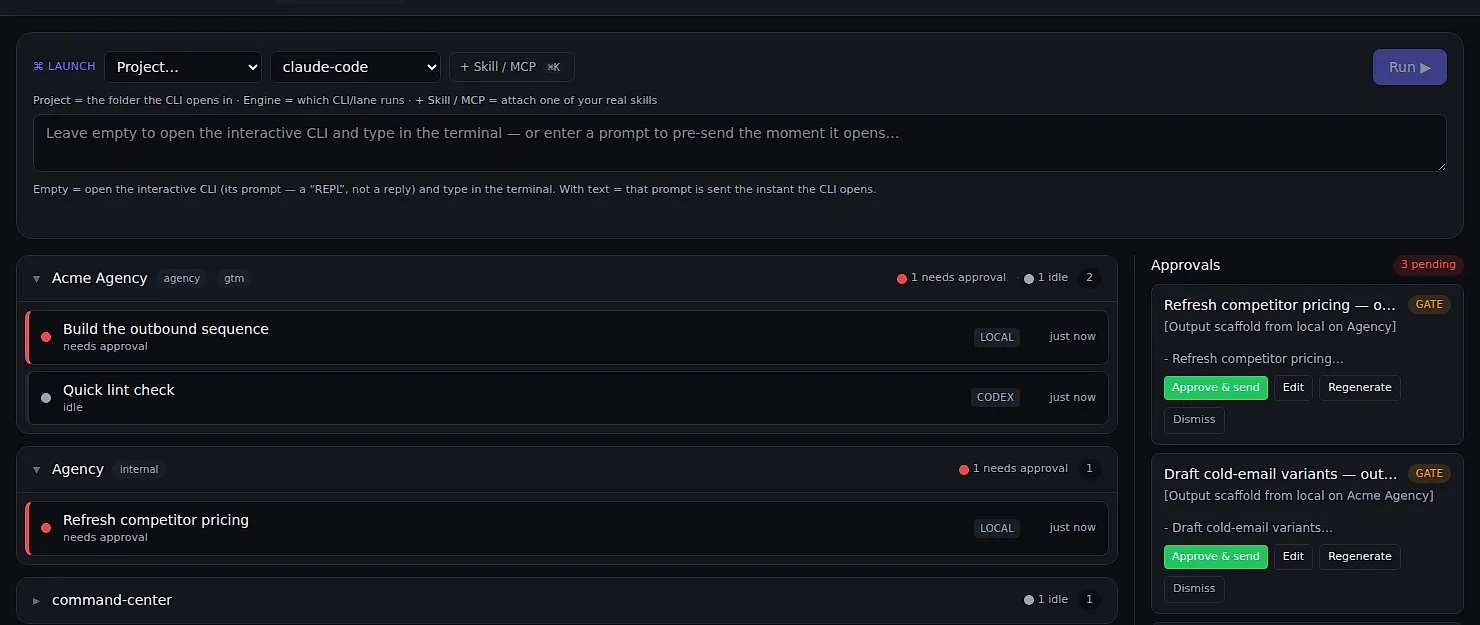
Command Center OSIn development
The same core backs an edition that can never run code, and that boundary has its own tests.
Enterprise Platform MCPIn development
Enterprise Platform MCP puts its 13 tools under three permission levels (read, write, and promote), and nothing is promoted to production without a person approving it.
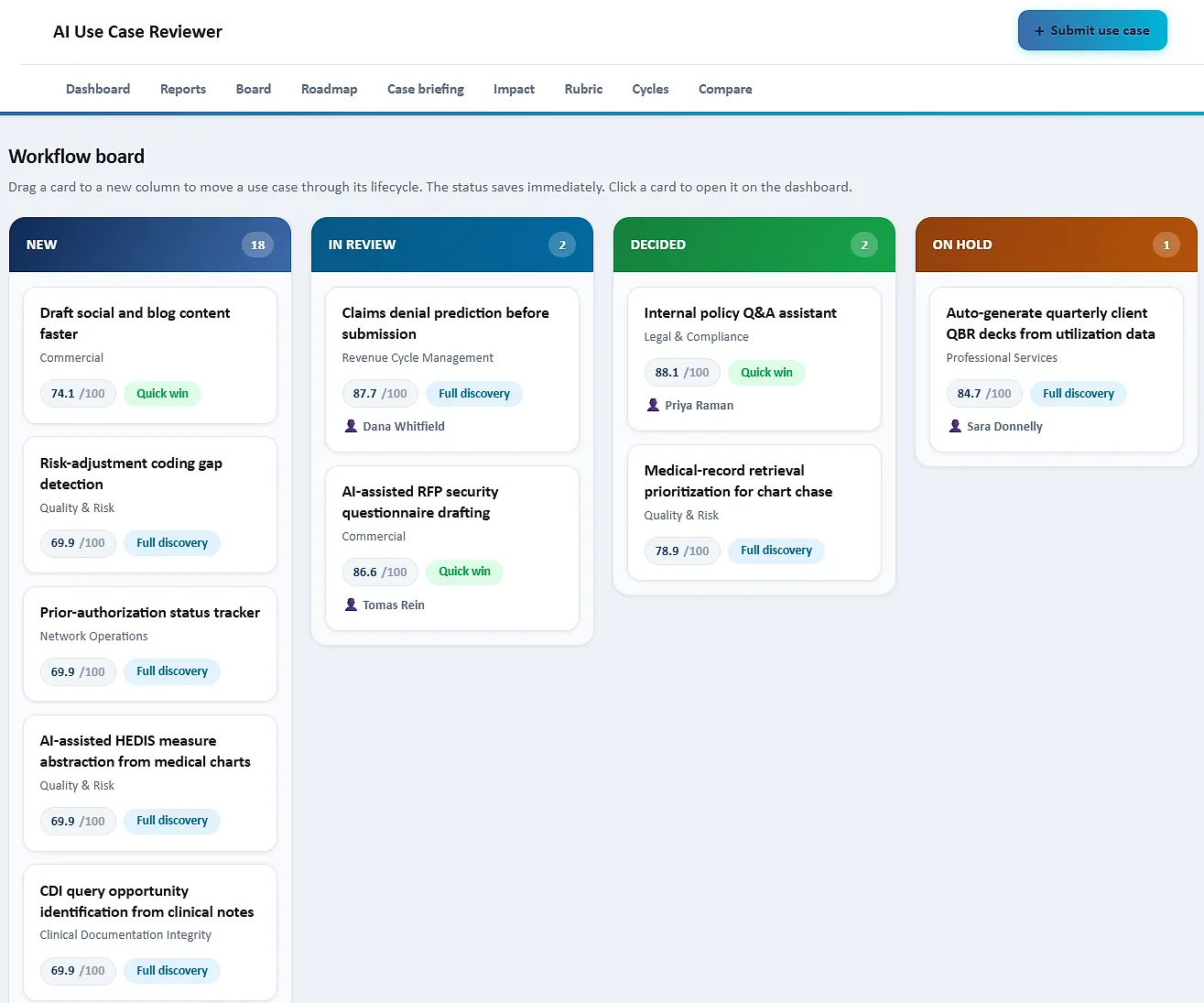
AI Use Case Submission PlatformProduction
Build tickets stay drafts, scaffold notes are never applied to a code repository, and the monthly update is copied and posted by a person.


Risk 3
Private data that slips out
Sensitive information disclosure, in OWASP's words, is private data leaving the place it belongs: patient details sent to an outside model, written into a log, or repeated in an answer. In healthcare that data is often PHI, and once it reaches an outside service it cannot be pulled back.
Private data comes in
A patient note, a name, or a record number lands in a prompt.
Where the guards step in: A gate before the model
Identifiers are redacted or tokenized, or the item is held for a person to review.
The model gets placeholders
It works on text with the private details taken out, or never sees the item at all.
No gate, no request
In LawLynx, if the gate cannot run in production, the request stops.
Guards in my apps
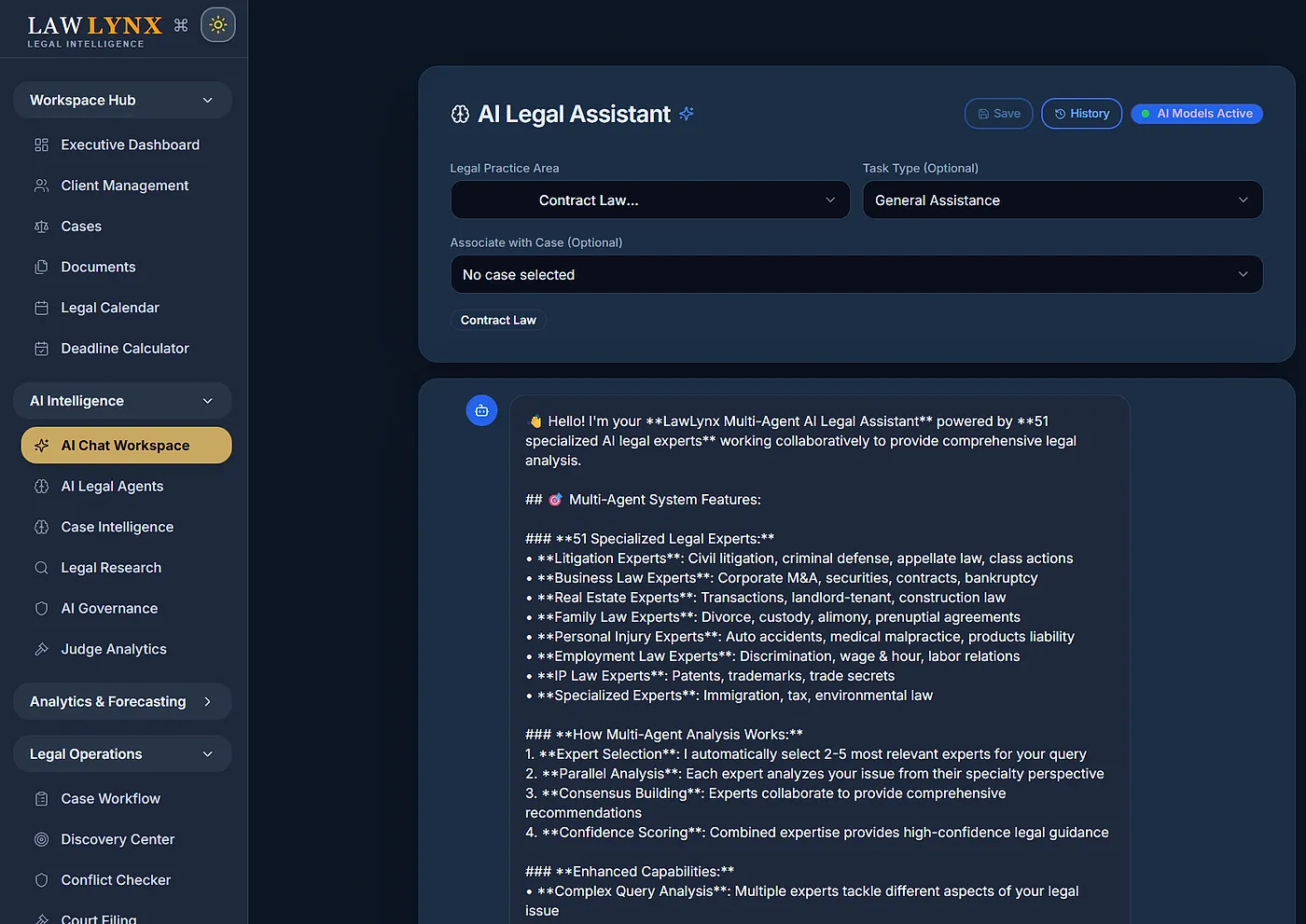
LawLynxIn development
A PII gate redacts all 18 HIPAA identifiers before content reaches an external model, and if the gate cannot run in production, the request stops.
LawLynxIn development
LawLynx also has an egress guard with its own enforcement tests.
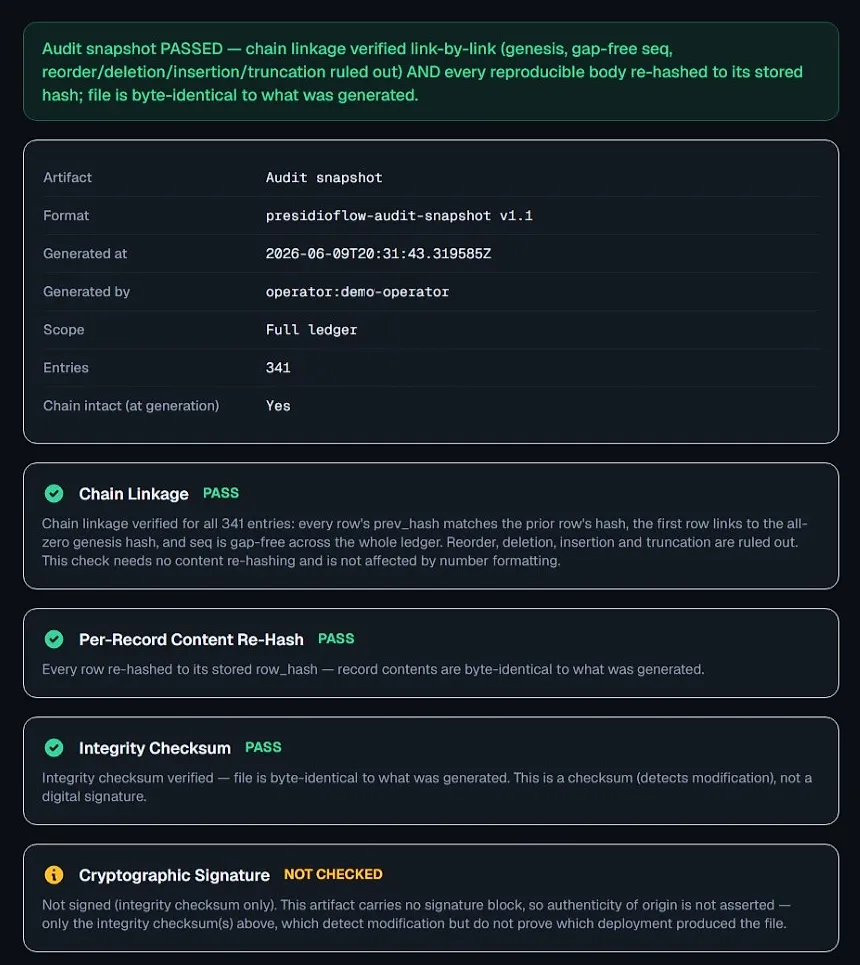
PresidioFlowPrototype
PHI is tokenized before remediation, so the LLM repairs structure it cannot read, and a test_no_phi_egress build gate fails if PHI could leave.
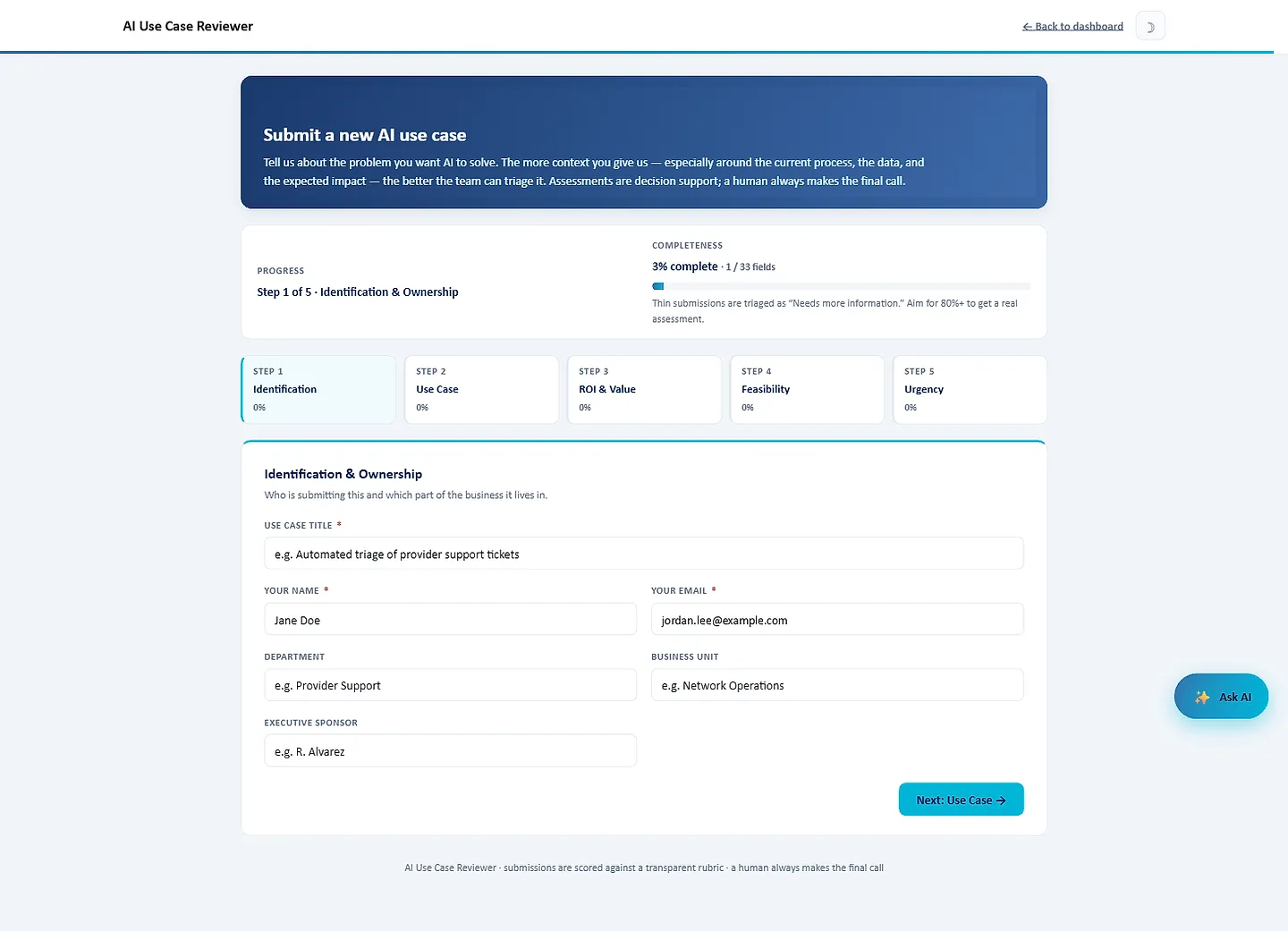
AI Use Case Submission PlatformProduction
Ideas that touch patient or personal data are held for compliance review, never scored, and never sent to a model.
AI Use Case Submission PlatformProduction
A redactor masks names, emails, birth dates, and record-number-like tokens before any model prompt and before logs are written; the code describes it as a heuristic screen, not a guarantee.
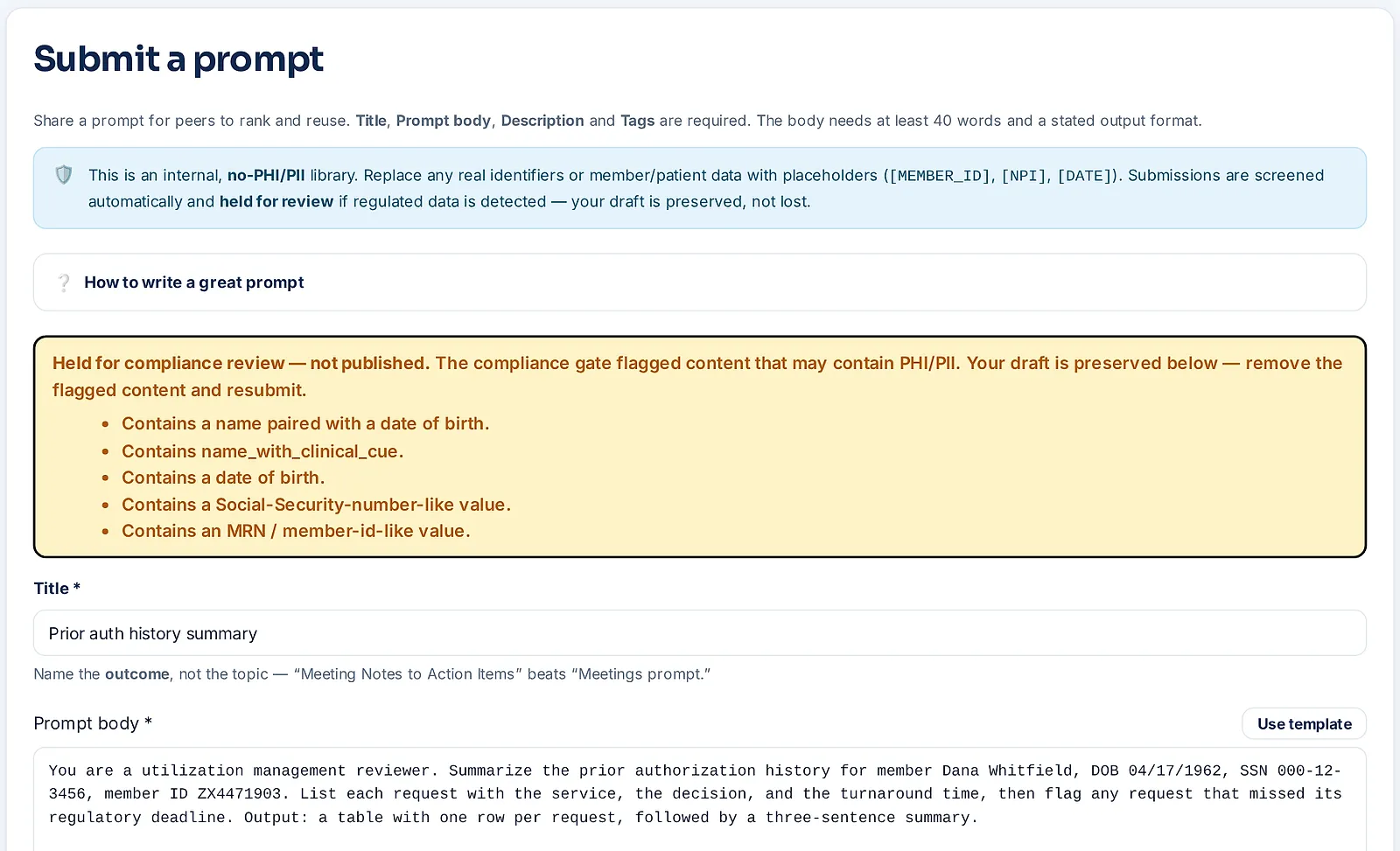
Prompt, Skill & Agent LibraryProduction
A submission that looks like PHI or PII is held for review with the draft kept, and a person clears, overrides, or keeps each hold, with every override recorded.
Enterprise Platform MCPIn development
The shared core applies the same policy and PHI guard to every request, whichever of the four adapters it comes through.
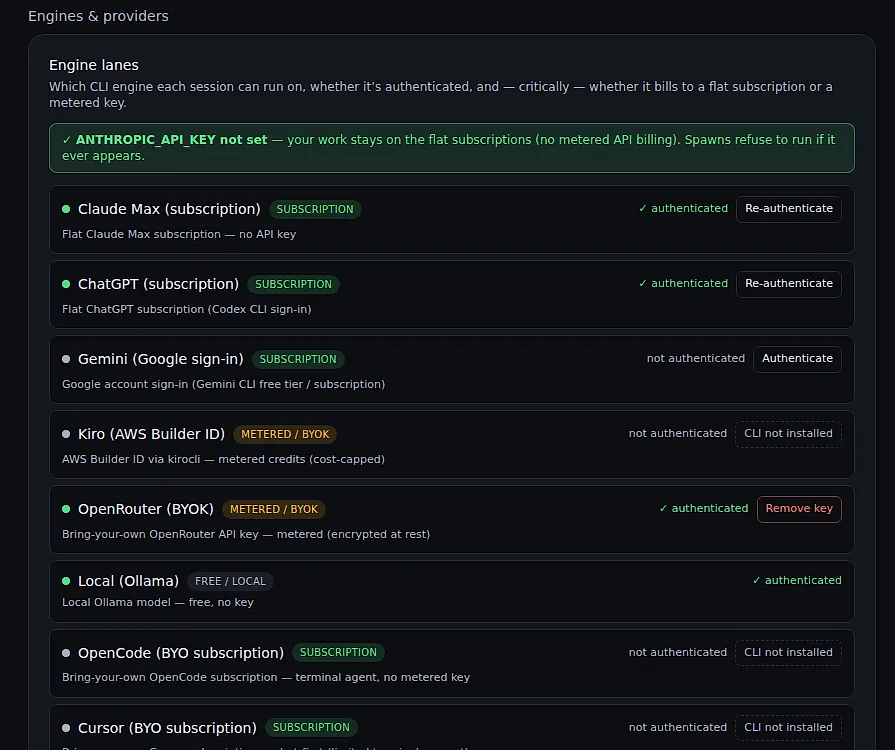
Command Center OSIn development
Credentials sit in an encrypted secrets proxy that agents never see.


How I check the apps
Application Testing Engine
ProductionThe Application Testing Engine I built at work runs static analysis, an AI code audit, unit, API, accessibility, performance, and security tests on the AI Solutions team's apps. Its AI code audit reads the code and flags places where user input can redirect the model, the opening for hidden instructions, and places where prompts or patient data can leak into logs. It also flags unchecked cost, unhandled failures, and AI calls that cannot be traced. It does not test what an agent is allowed to do while it runs.
Each guard above comes from an app on this site, shown at its real stage. If you want to talk through how one of them works, write to me.